The most common thing we hear from small brands is not "we do not know what to post". It is "we do not have time to post". Content becomes a daily chore, squeezed between orders and emails, and the feed ends up looking like it was made in a hurry, because it was.
So here is the system we teach every client in their first month. It turns content from a daily panic into a single afternoon, once a month. It is not magic. It is mostly a timer, a list and the discipline to stop fiddling.
Before the afternoon: one hour of thinking
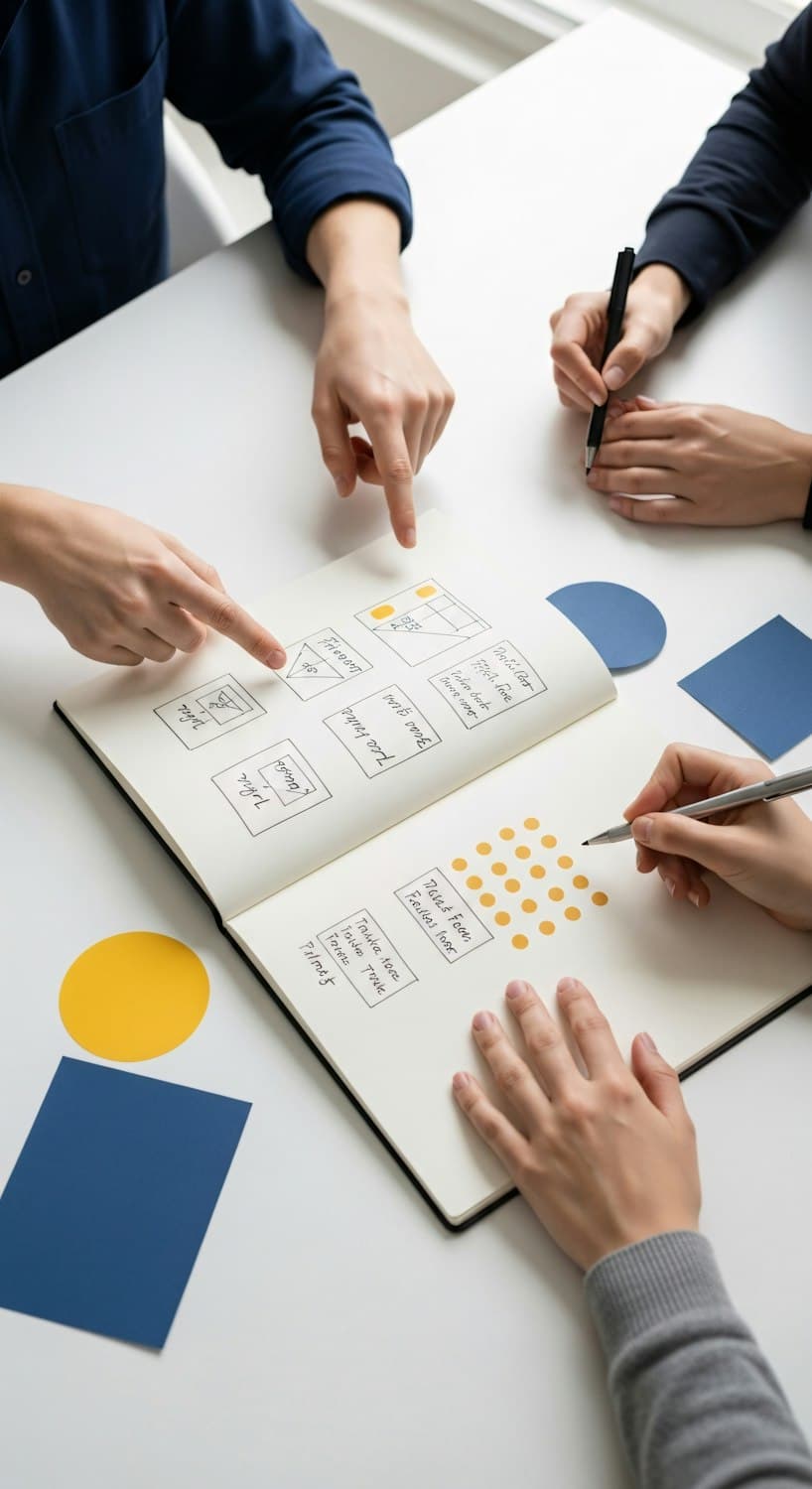
The afternoon only works if the thinking is done in advance. A week before, block out one hour and answer three questions on a single page.
- What is happening this month? Launches, events, seasons, restocks, anything with a date attached.
- What do people keep asking you? Scroll your inbox and comments. Every repeated question is a post.
- What is your series? One recurring format you will film four times, one for each week.
From those answers, write a list of twelve post ideas, each in one sentence. Not scripts, just sentences. "Show the new glaze being mixed." "Answer the shipping question once and for all." That list is your shoot plan.
The afternoon itself
Book four hours. Turn your phone to do not disturb, except for the camera. Then work in blocks, not in posts.
Block one: the series, 60 minutes
Film all four episodes of your series back to back. Change your top between episodes if you want people to believe they were filmed on different days. Same framing, same light, same opening line. Consistency is what makes it a series.
Block two: the answers, 45 minutes
Go through the questions list and film a short, direct answer to each one. Face to camera, one take each if you can manage it. These are your most useful posts and they will get saved for months.
Block three: the b-roll, 45 minutes
Walk around your space and film everything that moves: hands working, products being packed, doors opening, steam rising. Ten seconds of each. This is the footage you will reuse under captions, in carousels and behind text posts all month.
Block four: the photos, 30 minutes
Shoot stills for the carousels and the slower posts. Use the same spot by the same window. Your feed will look more cohesive than most brands with a full-time team.
You are not making twelve posts. You are making the raw material for twelve posts, which is a much calmer job.
After the afternoon: one evening of editing
Edit everything in one sitting, using a single template for your text and a single colour for your captions. Write captions in a document first, not in the app. Then schedule the whole month and close the laptop. When something topical happens, you will have the time and the headspace to react to it, because the rest of the month is already handled.
What usually goes wrong
People try to make everything perfect and run out of time after three posts. People film twelve completely different ideas and the feed looks chaotic. People skip the thinking hour and spend the afternoon staring at the ceiling. Keep the list short, the formats repeatable and the standard at good enough. Good enough, posted, beats perfect, sitting in your camera roll.
The month at a glance
- One hour of thinking, a week before.
- Four hours of filming, in blocks.
- One evening of editing and scheduling.
- Thirty minutes a week for replies and anything topical.
That is roughly eight hours a month for a feed that looks like you have a team. If you want the planning template we use with clients, it is free in our Playbook, along with a few other things worth stealing.